
ARETE: what it means, and how I use it in my work with founders
ARETE is an ancient Greek word that can be translated as a person's highest potential, or excellence in practice. This piece separates three things: the idea itself, my personal Arete OS, and the Arete AIOS method for companies.
Listen to this article
Narrated with an AI voice built from the author's voice.
ARETE (Gr. ἀρετή) is an ancient Greek word that can be translated as a person's highest potential, or excellence in practice.
For me it isn't a theoretical philosophy term. It's a north star that, over time, gave rise to two concrete things: my personal Arete OS, and the Arete AIOS method I use in my work with companies.
The short definition: what ARETE is
In ancient Greek thought, ARETE means excellence: the capacity to become the best possible version in a given role or activity.
That could be a good craftsman, a good leader, a good father, a good founder, or a good person in a moment of crisis. The point isn't a beautiful goal. The point is how a person actually lives and acts.
Modern coaching often talks about unlocking potential. ARETE is an older, and in my view more practical, way of thinking about the same thing.
Why this concept matters to me
I arrived at ancient philosophy while looking for a sturdier foundation than motivational literature and modern self-help concepts.
The Stoics gave me a clear idea about discipline, responsibility, and control over what's actually in a person's hands. Aristotle gave me another important idea: a person doesn't become who they are through intentions, but through repeated actions.
That thought is where my practical ARETE frame grew from. Three reasons this word fits:
- It connects the person and the work. Business decisions aren't made by a strategy. They're made by a person with their own energy, fears, ambitions, and habits.
- It's practical, not only ethical. ARETE isn't just "be a good person." It's also about mastery: how you lead, sell, think, train, talk to your team, and make decisions.
- It's a process. ARETE isn't a state you reach at a single moment. It's a daily practice: choices, routines, promises, and corrections.
Three places where your potential hides
When I work with people, I don't only look at future goals. Often the real answer is visible in three places: what a person has already achieved, what they're avoiding, and what they actually want next.
1. What you've already achieved
Many founders forget their own track record. They see only the next problem, not that they've already built a team, clients, a reputation, or resilience. Without that foundation, a person starts every new stage as if starting from zero.
2. What you avoid
Fear, doubt, and negative scenarios don't need to be thrown out. They need to be seen. If a person doesn't understand what they're afraid of, that fear still drives decisions from behind the scenes.
3. What you actually want
Only after that does it make sense to talk about the future. Goals without a foundation become fantasy. Goals without an awareness of fear become an escape. A good goal is grounded in reality.
The real work happens daily
ARETE doesn't begin with big words, but with daily actions. What you do in the morning. How you react to stress. Whether you keep your promises. How you talk to your team. How you take care of your body. How you make decisions under pressure.
Over time, repeated actions become habits. Habits shape character. Character determines what kind of business and life a person is able to sustain.
Routine → Habits → Character → Personality
We don't start with personality. We start with routine. Personality is the consequence of a routine that has taken root over years.
The 7 areas I use to look at a person and a business
A founder's problems are rarely only business problems. Fatigue affects decisions. Relationships affect focus. Money affects courage. Environment affects daily energy.
That's why I use a view across 7 areas:
- Body: health, energy, sleep
- Mind: thinking, learning, clarity
- Heart: emotions and relationships
- Network: people, connections, community
- Business: work, roles, goals
- Money: finances, resources, security
- Environment: home, workspace, the surrounding system
Seven areas give me a practical working frame: broad enough not to reduce a person to one dimension, and simple enough to use in an actual conversation.
From idea to system: Arete OS
ARETE isn't just a theory I apply in client work. It has become my Arete OS, the personal operating system by which I run my own life and work.
Arete OS is how the seven-area view, daily routines, and decision-making are connected in my own life: in my notes, my goals, my weekly review. It helps me avoid scattering my life in a hundred directions.
That doesn't mean the system is perfect. Quite the opposite, it's alive and it changes. But it's a foundation that lets me work systematically, rather than reacting to each day from scratch.
From a personal system to a method for companies: Arete AIOS
Working with companies, I noticed that the same logic (context, memory, clear structure) applies not only to one person, but also to an organization. That observation is where Arete AIOS grew from: a method and product that helps a company build an AI business brain that belongs to the company itself.
The Arete AIOS method rests on a five-layer architecture:
- Constitution. What the company is, what its values and boundaries are, how AI talks about it. This layer doesn't change week to week, which is exactly why it comes first.
- Memory. What the system knows about the company: clients, products, history. Organized by domain rather than by project, because projects end but domains remain.
- Skills. What the system can do: processes described in a way that lets them be executed repeatedly and well.
- Tools. What it acts through: calendar, email, documents, databases, and other connected systems.
- Focus. What the company is doing right now. The only layer that changes week to week, and that's exactly why it's kept separate from the rest.
The same sequence that works in my personal Arete OS also works inside a company: first what doesn't change, last what changes week to week.
How it all fits together
ARETE is an idea. Arete OS is how I personally live and work by that idea. Arete AIOS is a method for applying that same logic to a company, so it gains an AI business brain that belongs to it.
Neither replaces the other. They're three layers of the same thinking, at different scales.
Want to see what this looks like in practice?
The ARETE idea and my personal Arete OS are described here, in the FullMarketing archive. The Arete AIOS method and its five-layer architecture for companies live at Arete AIOS.
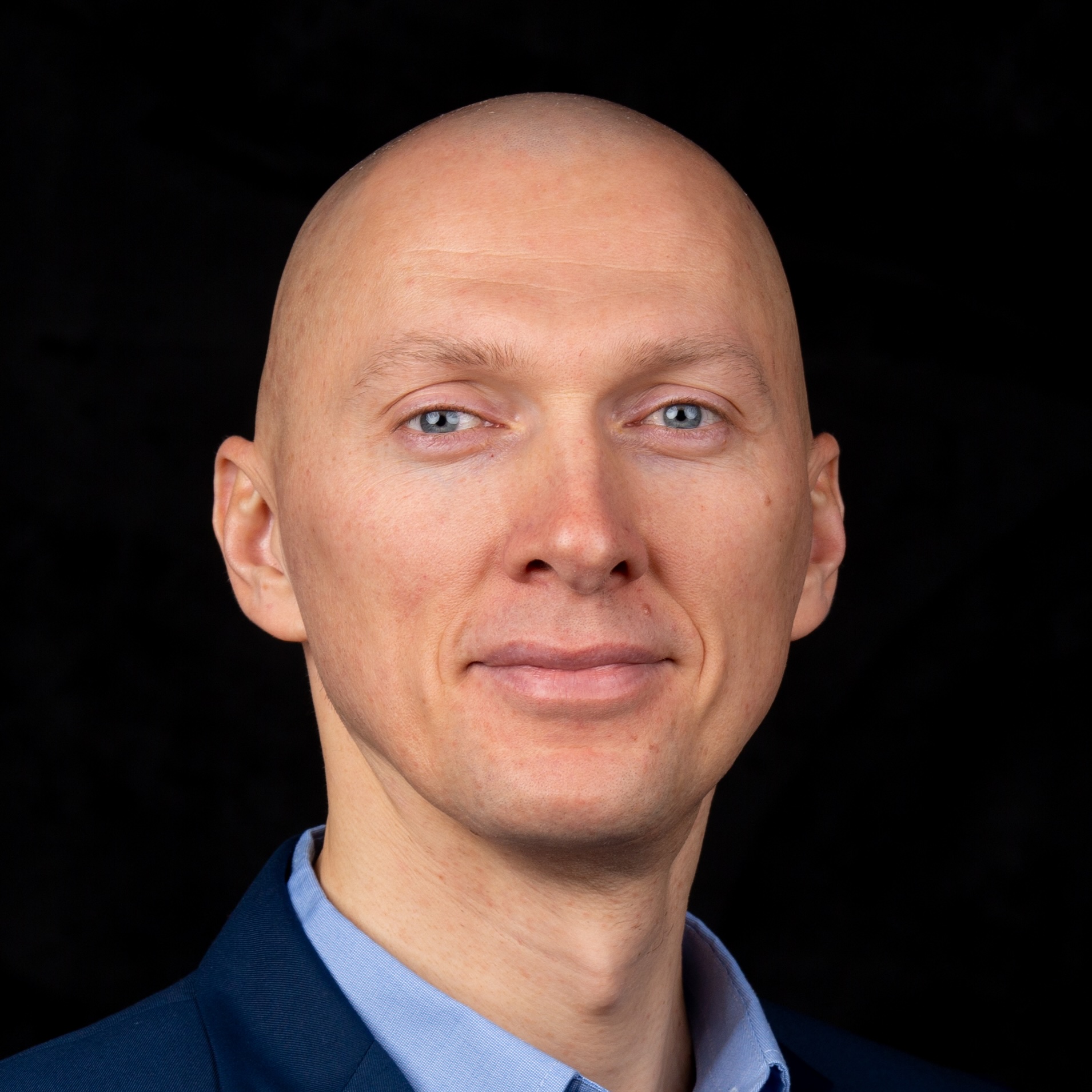
Egils Boitmanis: 20+ years in business, founder of Infinitum 8, Google Certified Trainer and author of the Arete AIOS method. Active work continues at Arete AIOS.
Frequently asked questions
Where this thinking continues
ARETE is the idea. The working method for companies now lives at Arete AIOS.
Related articles
The next chapter of FullMarketing: my active work now lives at Arete AIOS
FullMarketing stays my professional archive: articles, testimonials, speaking. My active work with companies now happens at Arete AIOS.
Inside DeepDive: 32 questions that changed how I work with clients
DeepDive is a 32-question assessment in 5 sections, built on the AIOS framework. It serves three purposes: a concrete starting point for a 6-month engagement, a self-discovery process for the client, and the foundation for building their AI partner profile. After dozens of completed assessments, I've learned that filling it out often delivers 50% of the total value on its own.