My path to coaching: 20 years of marketing consulting that led me to the human
20 years ago I started consulting in marketing. After 15 years I understood — at the root of business decisions there's something more than strategy. This is the story of how I arrived at coaching and why today I no longer separate it from business consulting.
Listen to this article
Narrated with an AI voice built from the author's voice.
The beginning: age 25 and the first clients
In 2005, when I was 23, I started working at the advertising agency Skats-S. For six months I got to know the marketing industry from the inside — how campaign planning works, how you talk to clients, how brands are built. That was my first serious contact with advertising and business communication.
Around the age of 25 I had already become the person founders called for marketing advice. At first about specific tools — Google Ads, websites, email campaigns. A few years later — about strategy. Ten years later — about business development as a whole.
20 years in marketing and business have given me a privileged view of how founders make decisions. I've worked as an employee in the largest digital agency in the Baltics, Infinitum 8, which I co-founded. I've trained teams at Google offices in Zurich, Dublin, Krakow, Prague and Vilnius. I've consulted hundreds of founders — from small startups to companies with 50+ employees.
And it was exactly this long road that led me to the conclusion that today is the foundation of my work.
The things people don't say but that drive their decisions
In the first years as a consultant I believed that what mattered most in business was strategy. The right plan, the right channel, the right message. If the client follows the plan, the results will follow.
That isn't true. Or at least — that isn't all of it.
After a while I started noticing: two founders with identical strategies and similar resources got completely different results. One executed the plan — the business grew. The other executed the same plan — and still stagnated. Why?
The answer I started to understand slowly was this: business decisions aren't made by a strategy document. They're made by a person. And a person is more than a rational planner.
A person has fears. A person has relationships. A person has a tired body or a broken night's sleep. A person has past experience that teaches which steps to say "yes" to, and which to instinctively step back from. A person has values that sometimes contradict business goals.
Consulting in marketing I saw this many times, but I didn't know what to do with it. My toolkit wasn't suited for it.
I could teach how to build a campaign. But not how to build the person who would execute it.
Public speaking and trainings — the first turning point
Roughly over ten years, alongside consulting, I started speaking publicly. At conferences, seminars, corporate trainings. At first about marketing, later more and more — about how founders make decisions, how teams function, how to implement change.
Public speaking gave me something quiet 1-on-1 consulting could not: the discipline of thinking clearly. When you know that in 30 minutes you have to say something valuable to 100 people who know nothing about your context, you're forced to distill the thought down to the bone. To find what truly matters.
Same with trainings. When you teach a group, you see which questions repeat. Which words don't land. Where people get confused. It's like a field lab with 20 people at once — and they honestly show you what works and what doesn't.
In this period I started noticing: the best questions in seminars weren't about marketing. They were about the human. "How do I find a team I can trust?" "How do I make a decision when nothing is clear?" "How do I not break down when the company grows faster than I do?"
Those weren't marketing questions. They were life questions that affected the business.
2020 — when I started taking coaching courses
2020 was a year of change. The world paused, many founders ended up in existential questions — what am I really doing here? Why? Is it worth it for me? I was no different.
That was exactly when I decided to start taking coaching courses. Not because I wanted to change profession. Because I realized — I was missing the tools for what I had been doing intuitively for years.
Coaching as a discipline — whether internationally certified ICF coaching or deeper psychotherapeutic traditions — teaches several things the marketing world doesn't:
- Listening not only to the words, but to what is underneath them
- Asking in a way that lets the person find the answer themselves, instead of giving advice
- Not taking for granted what the client says is the problem — often the real problem is something else
- Working with contradictions between what a person says they want and what they actually do
These tools changed my consulting work. Suddenly I started seeing that clients I used to work with for 6 months could have reached the same result in the first month — if at the beginning they had gone through a high-quality clarity session.
Why I moved from personal development to business + personal life
I started offering coaching services in 2020–2021. At first the focus was on personal development — how a person finds their direction, builds routines, works with goals. Classic coaching territory.
But I quickly noticed something interesting. Looking at my clients, most weren't "average people who want to grow". Most were:
- Founders running their own business
- Consultants and advisors
- Leaders in companies with 10–50 employees
- People who themselves help others
All of them had grown to the point where personal clarity and business clarity were tangled into one knot. You couldn't work on one while ignoring the other anymore. If a founder doesn't know what they want from life, they can't make decisions in the company correctly. If the company drains all the energy, personal relationships and health collapse — and so does the quality of the company.
This is exactly where I understood what my real work is:
I don't work with personal development. I don't work with business. I work with the person who runs a company — and both sides are one whole.
Why coaching and consulting merged in my approach
The traditional consulting world and the coaching world are almost opposite poles.
The consultant arrives with answers. He knows the industry, the tools, what works. He says what to do. The client executes.
The coach arrives without answers. He asks. The client finds the answer themselves, inside their own life and business context. The coach helps think more clearly, not provide a solution.
Both approaches have their strengths and weaknesses. Consulting alone — the client takes advice they don't fully understand and executes mechanically. Coaching alone — the client finds an answer, but it's banal, because they lack knowledge about industry reality.
My discovery was that by combining the two, the client gets something neither alone can give. We start with coaching clarity — who you are, what you want, why. Then we move into consulting work — how to actually execute it in the business.
That's what I call strategic partnership — not a client-consultant relationship, not a client-coach. A partnership where both sides walk through the questions and the execution together.
What it looked like in this practice
In the FullMarketing practice, the work was structured around two formats:
1. DeepDive (3 sessions of 45 minutes over 30 days). The starting point: a deep session walking through 7 areas of life (body, mind, heart, network, business, money, environment). Before it the client filled out a questionnaire (around 20-30 minutes of work). In the session we put the details together. The result was clarity about the priority right now and the next concrete step.
2. ARETE strategic partnership (6 months). Long-form work with founders who wanted to systematically change both the personal and the business foundation. We started with a DeepDive. Then we planned, executed, measured. Weekly meetings, and progress tracked on the client's own 1-10 self-assessment across an 11-area life-tracking system.
Both formats rested on the same assumption: if you want to change the business, start from clarity about the person who runs it. That assumption carried over unchanged into the work I now do at Arete AIOS.
What I notice every day
Working this way, I've noticed one thing I want to say specifically. Coaching skills aren't reserved only for consultants and trainers. They are skills every person should have — parents, leaders, life partners.
The ability to listen without imposing solutions. The ability to ask in a way that lets the other find their own voice. The ability to not rush with advice. The ability to see what's behind the words.
If everyone in the world had basic coaching skills, we'd all be better people. Less conflict. More understanding. Fewer imposed decisions. More authentic ones.
That's why this work is more than a profession for me. It's an approach to life as a whole.
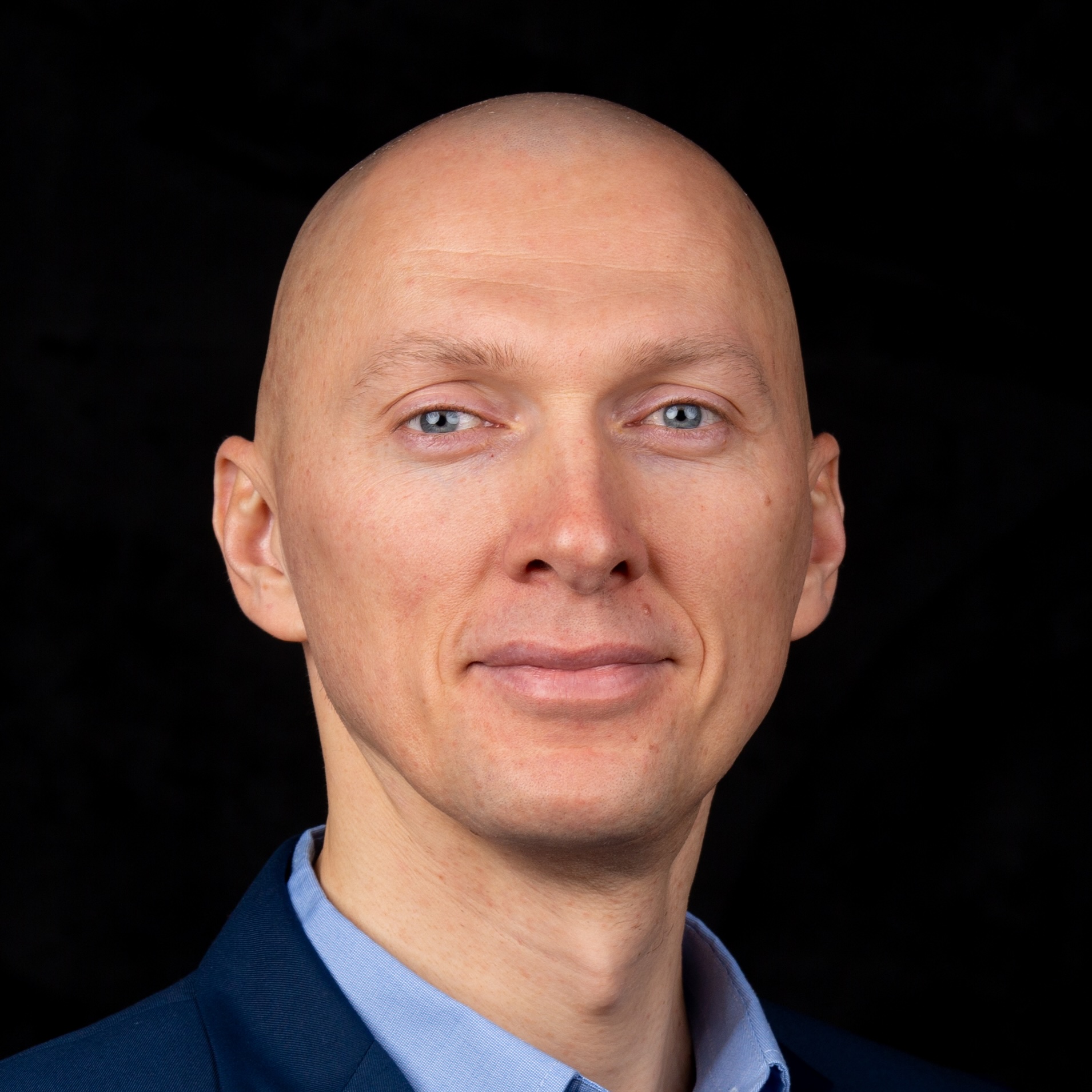
Egils Boitmanis is a business, AI and strategic partner with 20+ years of experience in business, including co-founding Infinitum 8 (the largest digital agency in the Baltics) with a successful exit. Today he works with founders as an executive coach, lecturer and AI implementation partner, combining business consulting with a coaching approach.
Frequently asked questions
Want me to speak about this?
I still give talks, guest lectures and team workshops on these topics.